Step inside the story
Describe a room out loud, each thing appears in it, and the room becomes a film.
MyStory is a concept, and my journey into immersive storytelling. It started as an AI video director that planned a film shot by shot. Now it's a world you step into and talk into being, and the world you build becomes the film.
The latest version. A screen recording of the demo, with sound and captions. The conversation is scripted and the pieces were made ahead of time.
How it changed
The latest version comes first on this page. Further down is how it got here, from the first run to the sketchbook and the voice desk.
First run. I designed the characters, the director planned each act as shots, and it marked any shot that didn't match the designs.
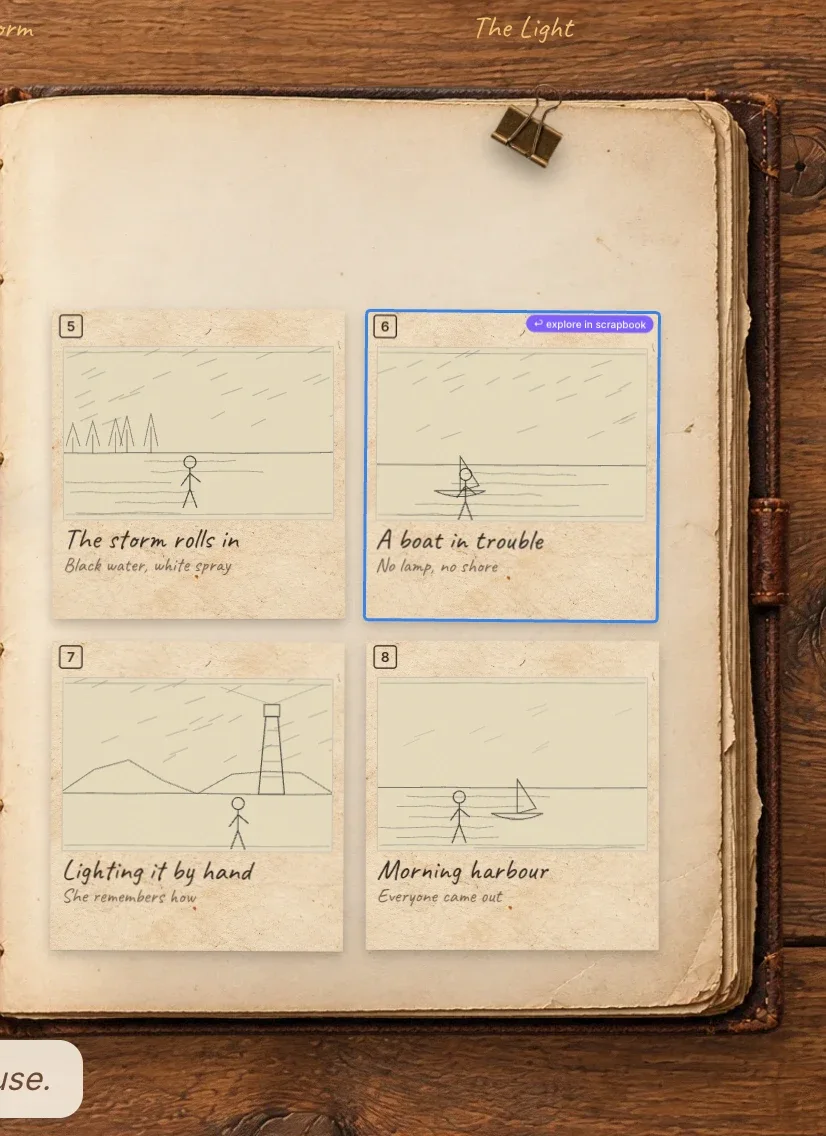
Sketching first. The director drew each scene as a pencil sketch before any pictures were made.
Voice desk. The front door became a conversation with an orb that listens, thinks and answers out loud.
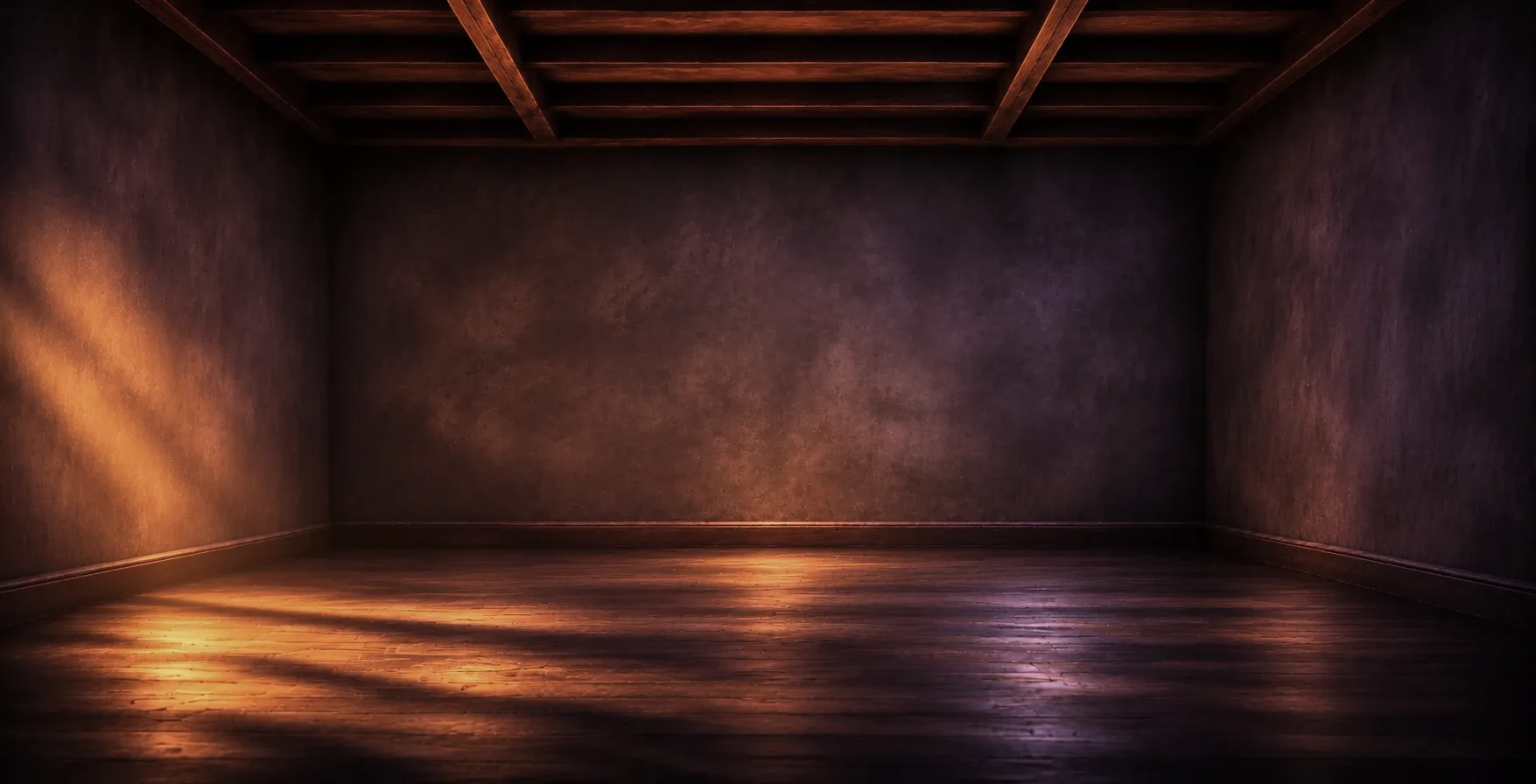
The room. You stand inside the world and describe it out loud, and each thing appears right after you say it.
What you see in the demo
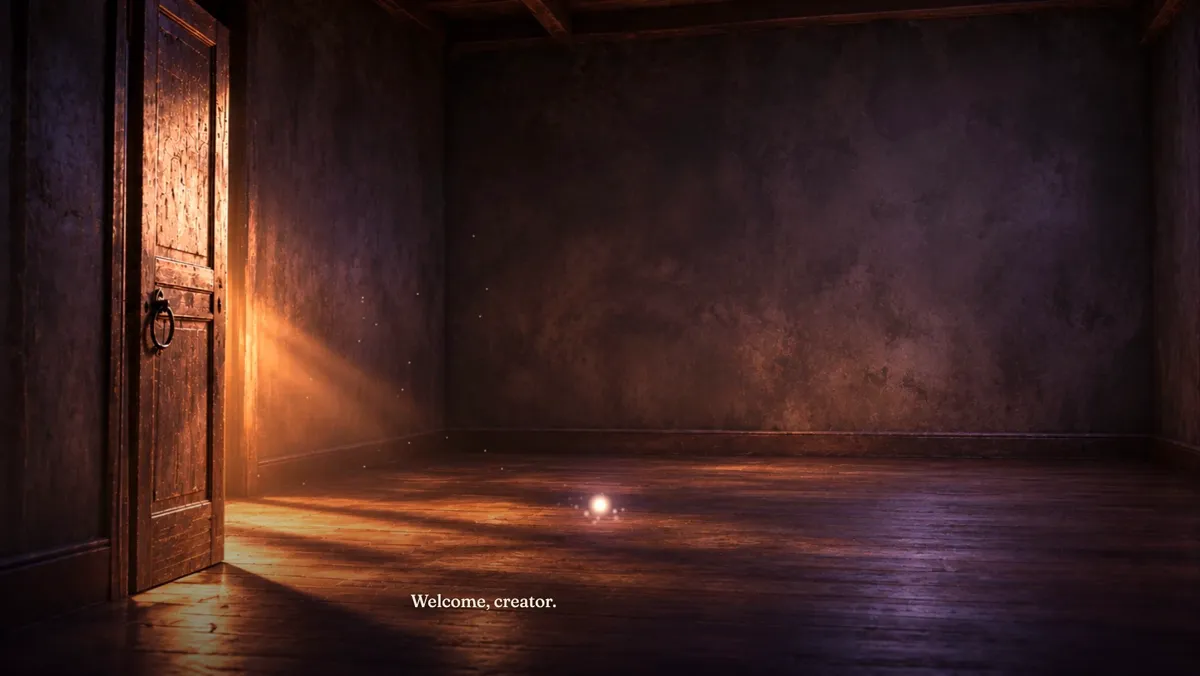
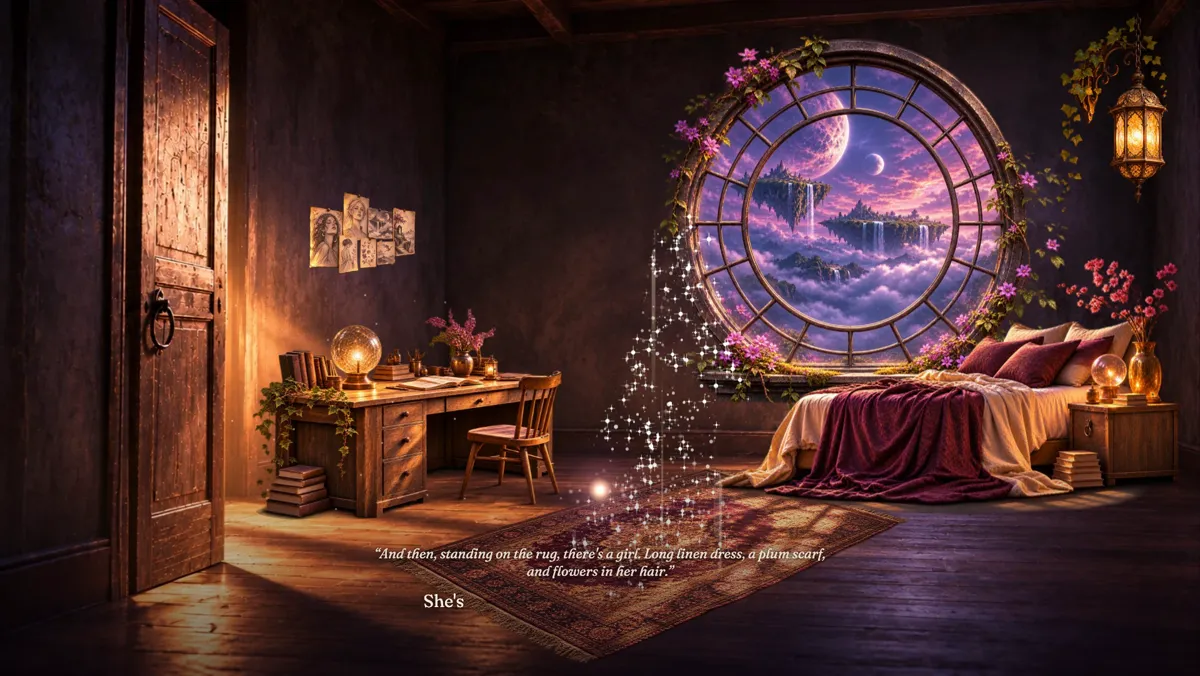
The demo starts in an empty attic room, with a door left open and warm light across the floor. A small glow, the AI, says “Welcome, creator” and asks what the creator imagines today.
The creator just talks. They start with a big round window like an old clock face, with islands floating in a purple sky outside. The window shimmers into the wall, and the AI encourages them to keep going.
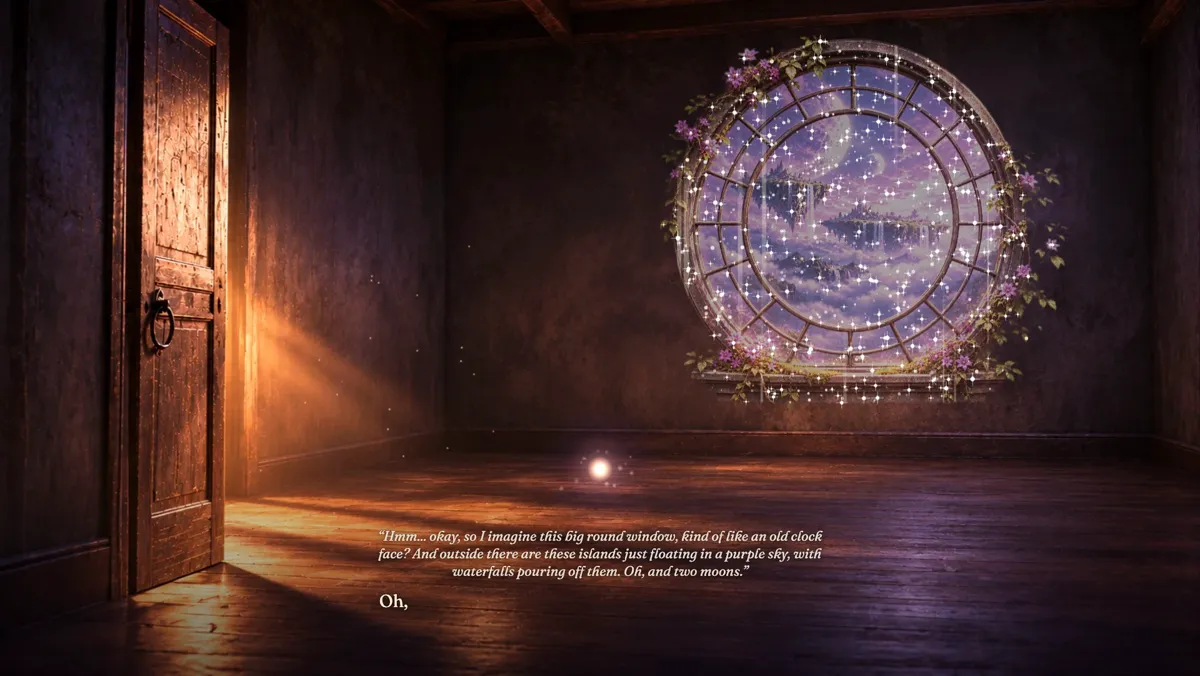
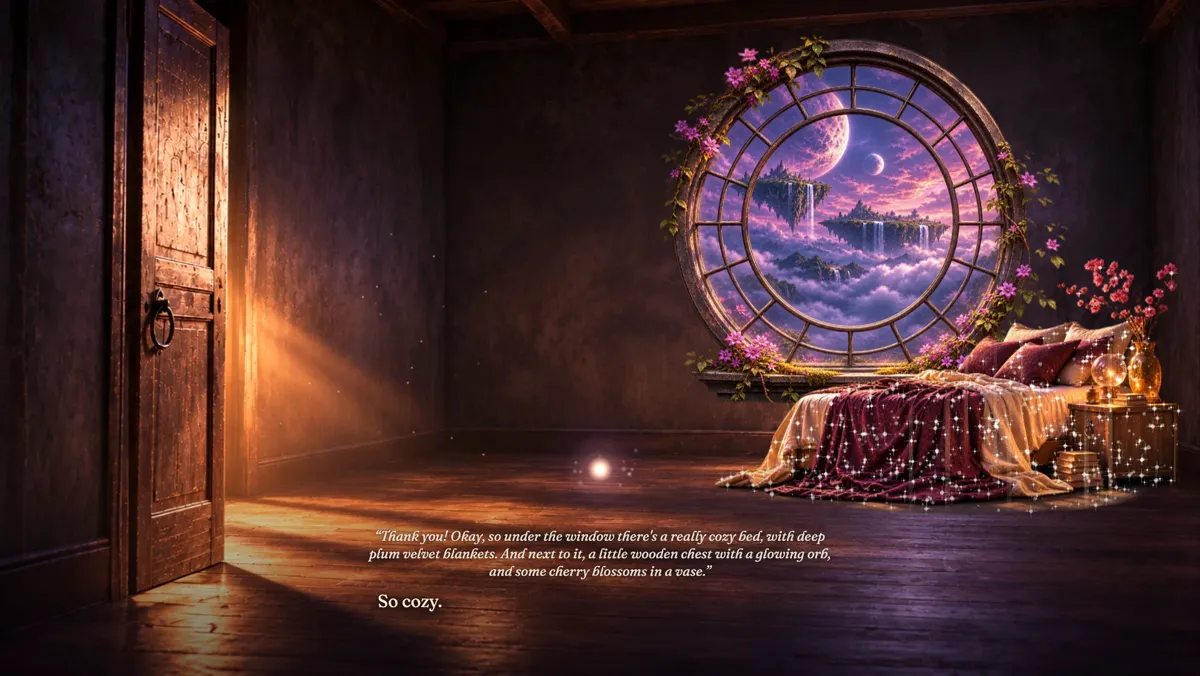
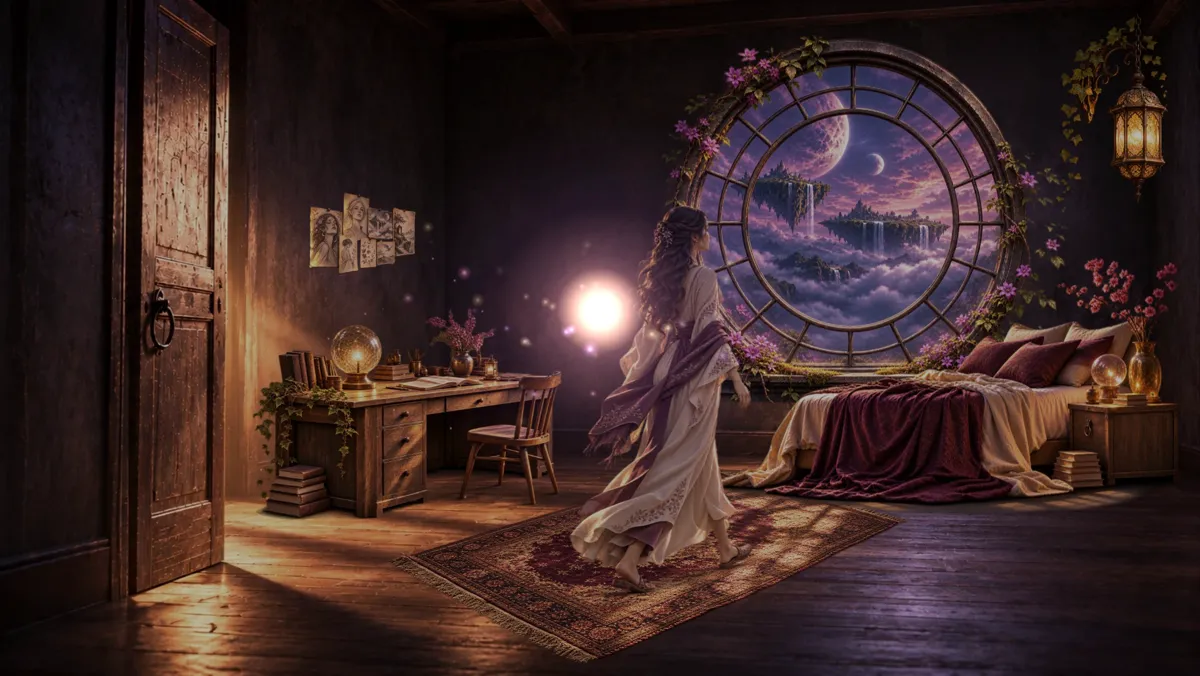
Piece by piece the room fills in, with an artist's desk and a glowing lamp, sketches on the wall, a brass lantern, an old rug and finally a girl on the rug.
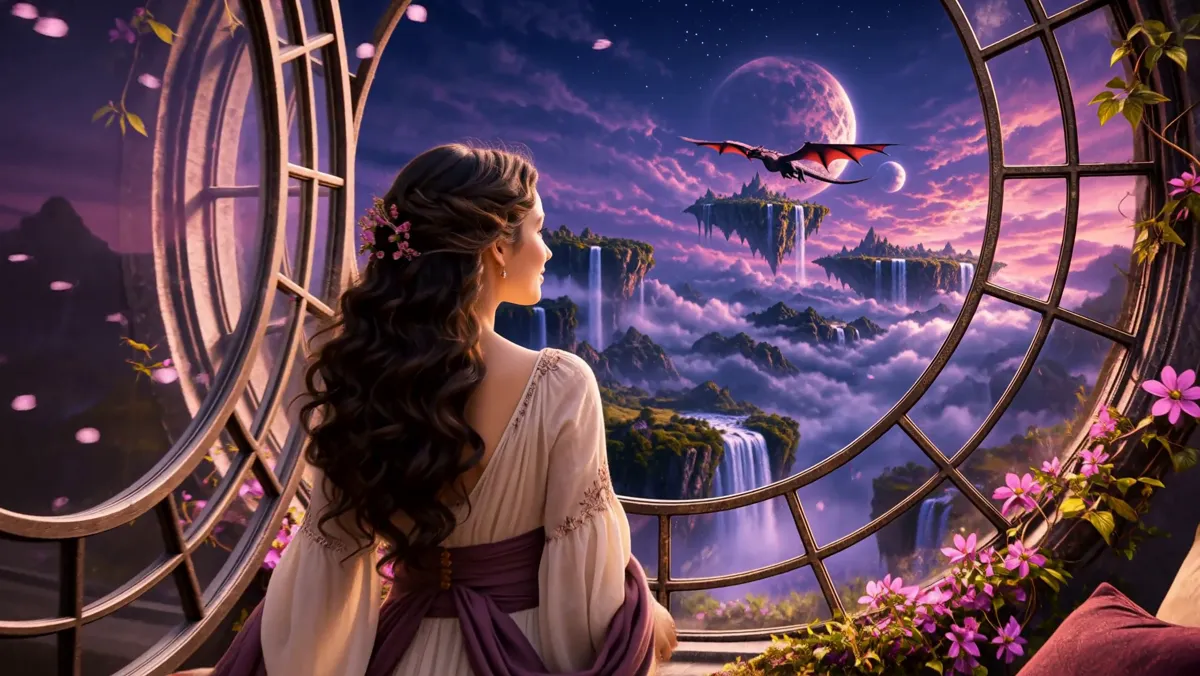
Then the creator says what happens. She opens the window, petals blow in, the lantern sways and a little dragon glides past the moons. The AI offers to show it, and the creator says yes. The glow drifts around the room and bursts into light, and then the film is there.
The decisions, and why
A world first, a film second. The earlier MyStory planned a film scene by scene on a board, with approvals and prices. It worked, but it felt like production software. Here the world is the product and the film is the payoff. Building the room first also means the film starts from exactly what you made, so it looks like your world, not the AI's guess.
Talking, not typing. There's no text box. Speaking makes it feel like imagining out loud, and the words appear on screen as they're said.
The creator isn't the character. You're the author, describing someone else's room and someone else's story, so you can make anything, not just yourself.
People don't talk in prompts. The creator speaks the way people really do, with “okay, so” and “oh, and”, trailing off and adding things. The AI doesn't repeat back what you said. It encourages you and nudges you on, like a good collaborator.
Things appear once you've finished speaking. Each piece beams in right after you describe it, and the AI starts replying while it appears, so it feels like it heard you and acted.
The AI is a light, not a face. It's a soft glow with fireflies drifting around it, each on its own path, and only the glow brightens when it speaks. It's there without becoming a character in your story.
Everything has to belong in the room. Size and placement mattered far more than I expected. The bed sits against the wall under the window, the sketches are small and flat on the side wall, and the girl is the right size next to the bed. One thing out of scale and the spell breaks.
Waiting should feel like magic. Making a film takes minutes. Instead of a progress bar or a video player, the glow wanders the room, gathers and bursts into light, and the film is simply there.
What it doesn't do yet
The pieces in this demo are made ahead of time and placed by hand. In the real product, the AI would make each piece as you describe it and place it in the room straight away. If it put something in the wrong spot, you could drag it to where you want it.
To place things well, the AI needs to find the edges of the room, like where the floor meets the walls. Depth techniques like the ones in my Into the painting and Stereo video experiments could help with that. Keeping one art style and one kind of lighting across every piece is the other hard part. This demo doesn't do either yet.
The conversation is scripted. Both voices are AI voices that were made ahead of time, and the demo isn't listening to a live person yet.
The film is one ten-second scene, and it takes a few minutes to make. The demo shows the moment it arrives, not the wait.
It's one room and one scene. Keeping the same character and the same place across many scenes is the next big problem.
You can direct the film, but not every detail. The camera and the action follow what you describe. The finer details are up to the AI, and the character can drift a little from how she looked in the room.
An idea I want to try
Places you can go back to. Every place you build for a scene would be saved. If the story needs to return to a room later in the film, you pick it and the next scene starts there, instead of describing it all over again. It would also help the same place look the same each time the film goes back.
How it got here
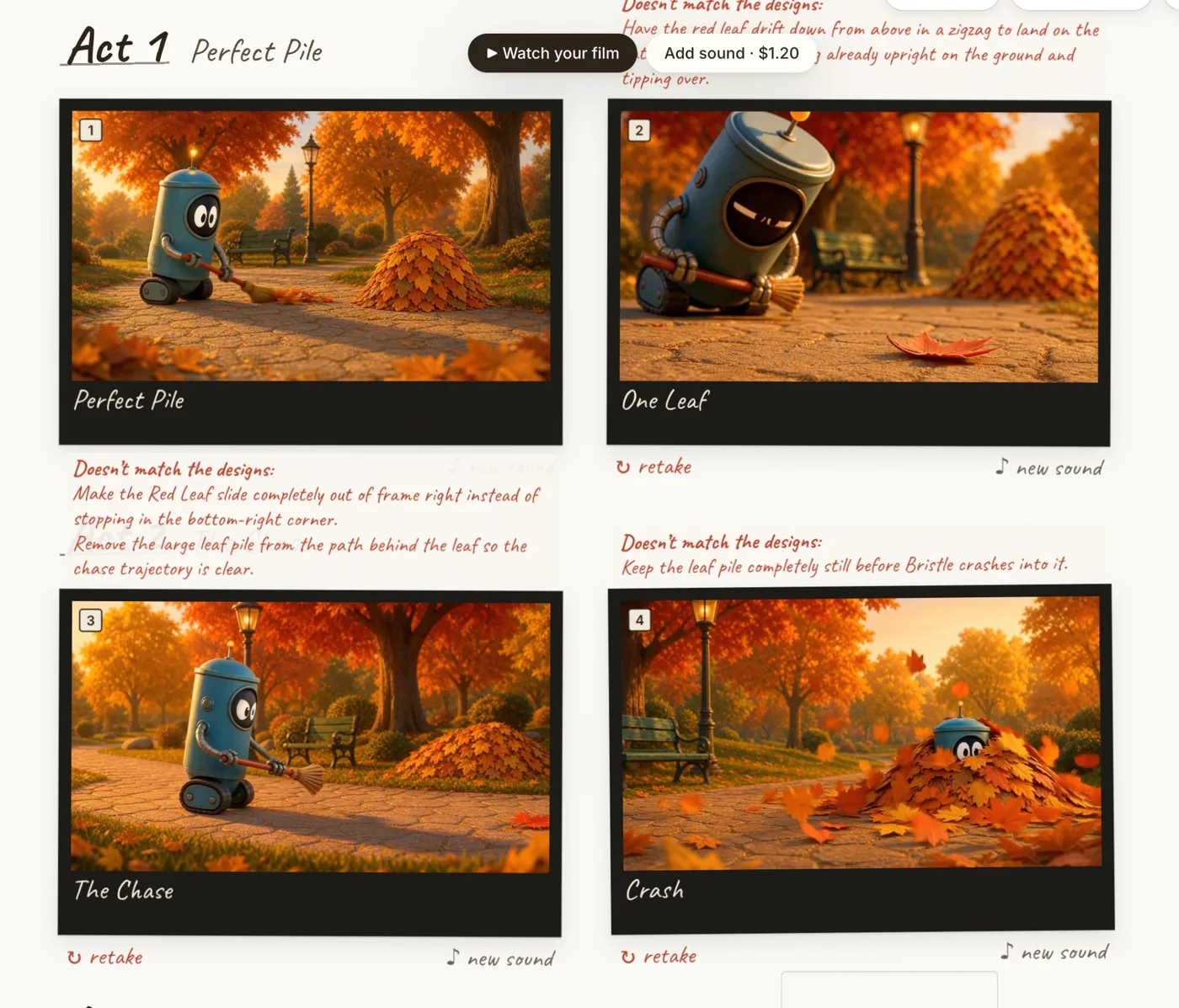
My very first run of MyStory was a film planner. I designed two characters, Bristle the sweeping robot and Mina in her yellow raincoat. The director planned Act 1 as four shots. It wrote a note above every shot that didn't match the designs. One note says a leaf stopped in the corner when it should slide out of frame.
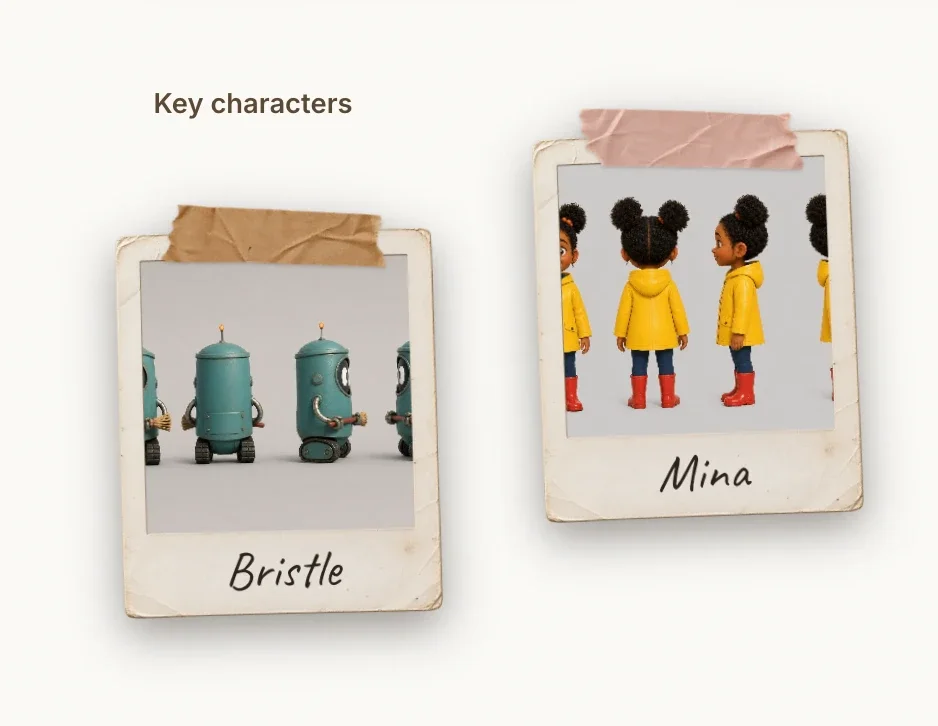
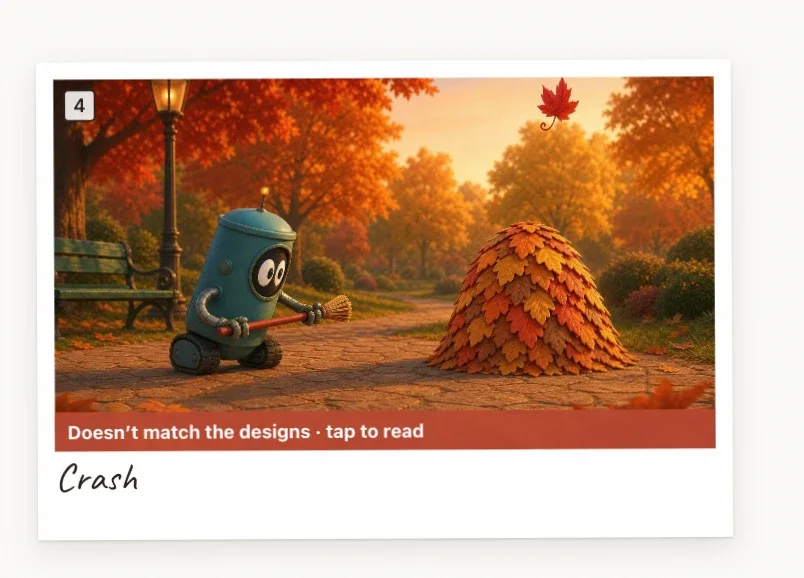
Sketching the idea first
Next I wanted to test how the flow would feel if the idea was sketched first. The director drew each scene as a quick pencil storyboard in the sketchbook, and you could pick a sketch to explore it further in the scrapbook.
The voice desk
Then I wanted the front door to be a conversation, not a form. You talked, an orb listened, thought and answered out loud, and the storyboard filled in on a sketchbook in front of you. The orb showed what it was doing with light instead of spinners.
Pauses were the hard part. If the turn ended too soon, one thought got split in two, so the director waited for a full second of silence before it answered. Talking over it had to work too, like it does with a person, so if you started speaking it stopped.
Money never moved by voice. Anything that cost money waited on an approval card on the screen. In the end I took the orb out and let the mic do it all.
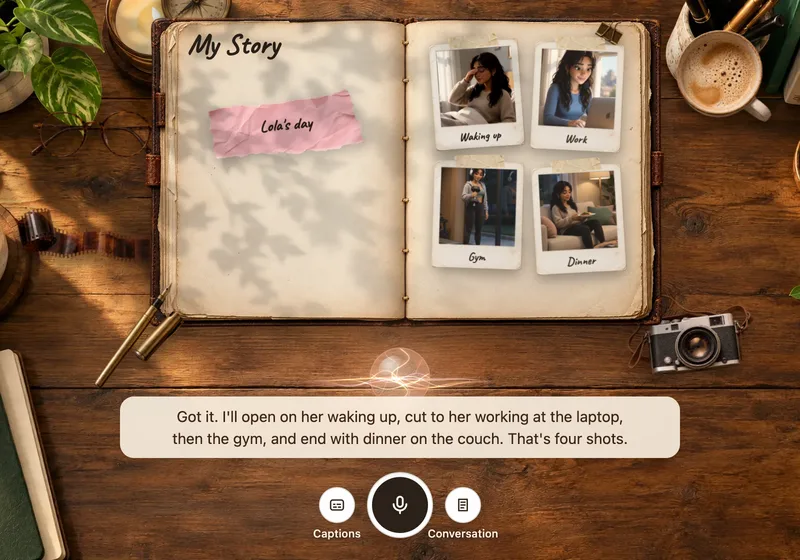
What the versions taught me
Each version moved the plan further out of the way. The film planner worked, but it felt like production software. The sketches and the voice desk each tried to make the plan feel lighter. The room drops the plan altogether, so you build a world and the film comes from it.
The part that stayed is talking. Speaking felt more like imagining than filling in a form, so the latest version has no text box at all. The next step is a room that builds itself well, with pieces made as you speak and placed where they belong.
Next question
Can the same character and the same room stay consistent across many scenes, so one room can hold a whole story?
More experiments
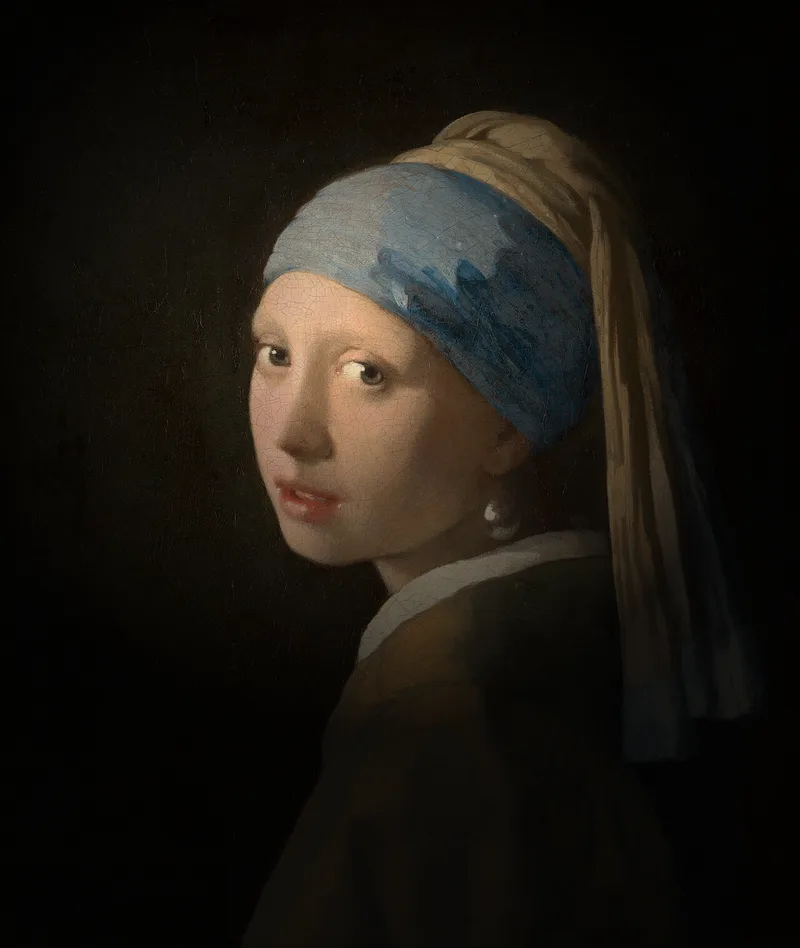
Moving the light inside a Vermeer
I used an AI depth model to guess the shape of the face in a painting, so a light can sit wherever your mouse or finger is.
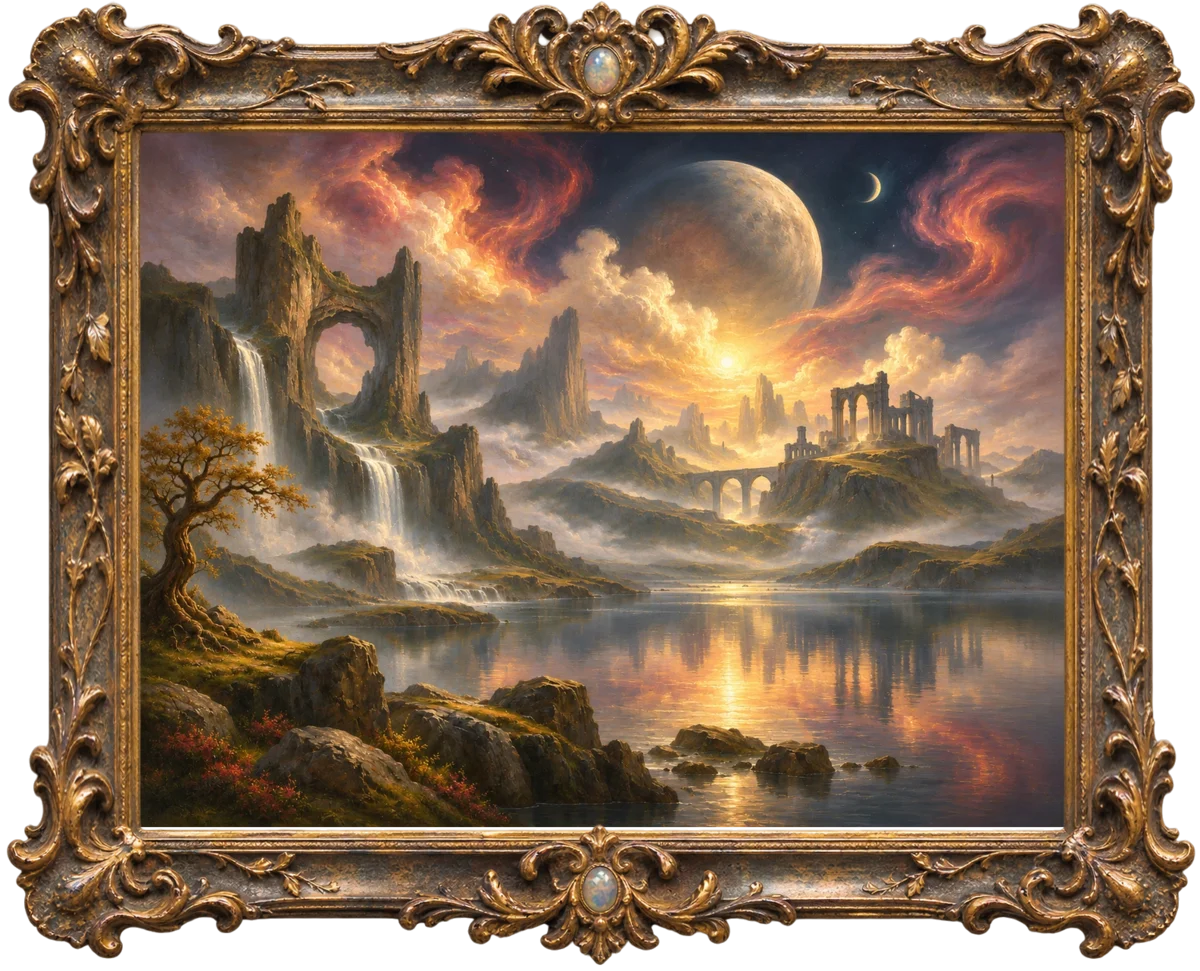
How much can I control what a world model invents?
I asked a world model not to invent a bridge, and it added one anyway. When I painted the bridge out of its 360-degree view, the bridge stayed gone, but my rough fill showed up as a smudge in 3D.
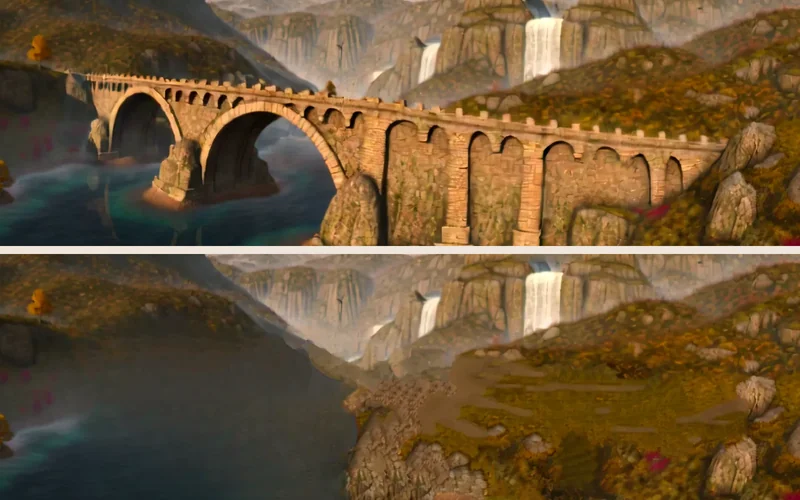
I gave an AI agent one rule for a world model
I gave an AI agent seven tools and one written rule, which was no bridges outside the painting's frame. It removed three invented bridges and changed 4.99% of the 360-degree picture's pixels, but a thin black line still shows in 3D where one bridge stood.